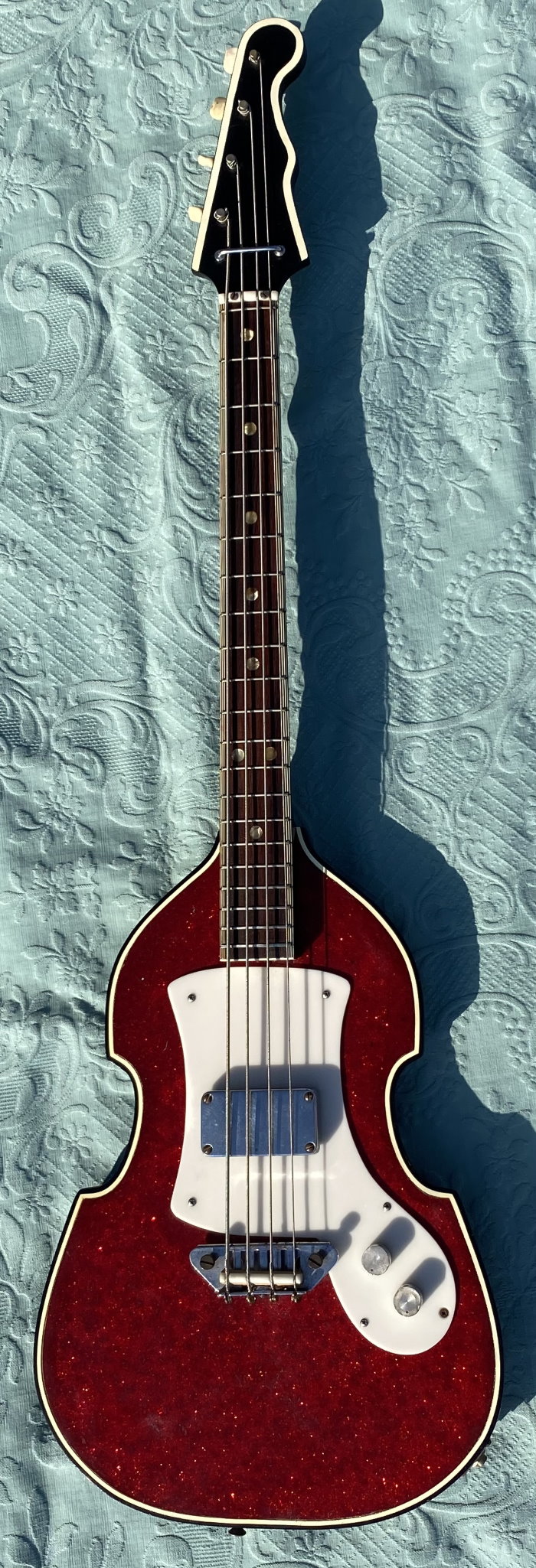
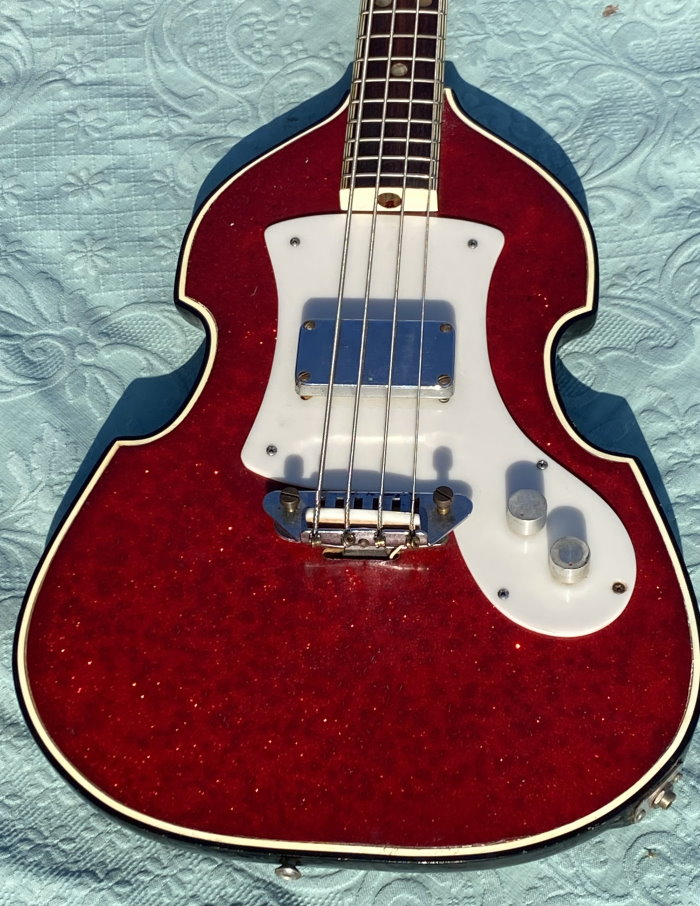
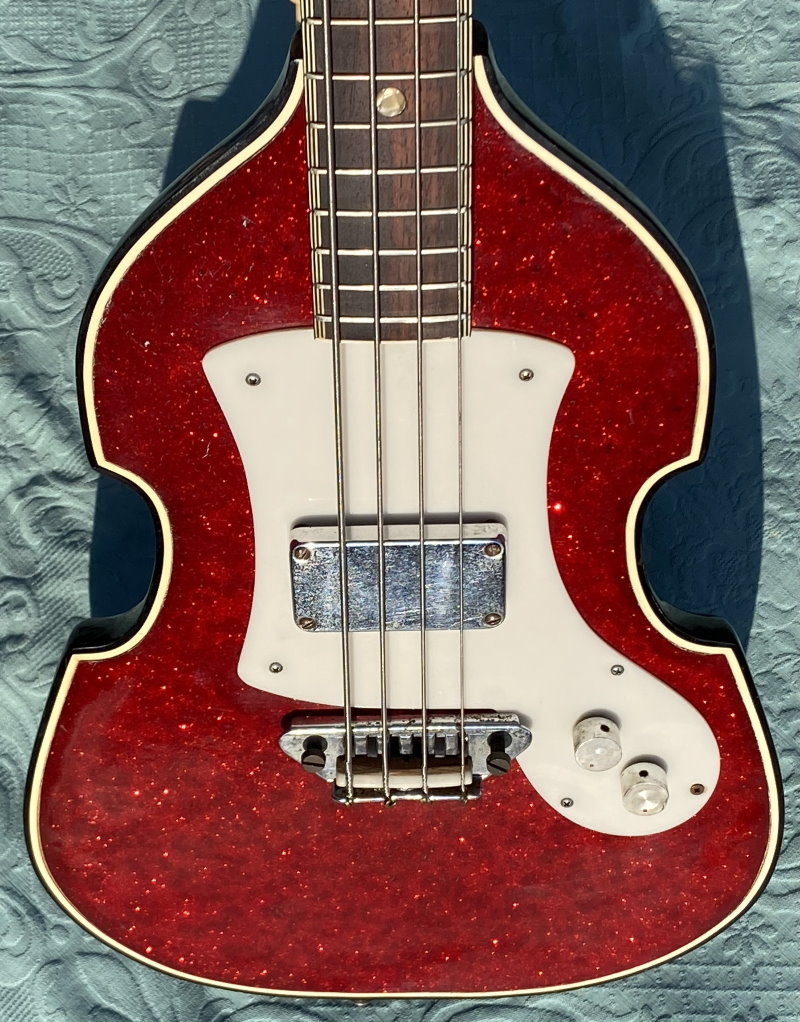
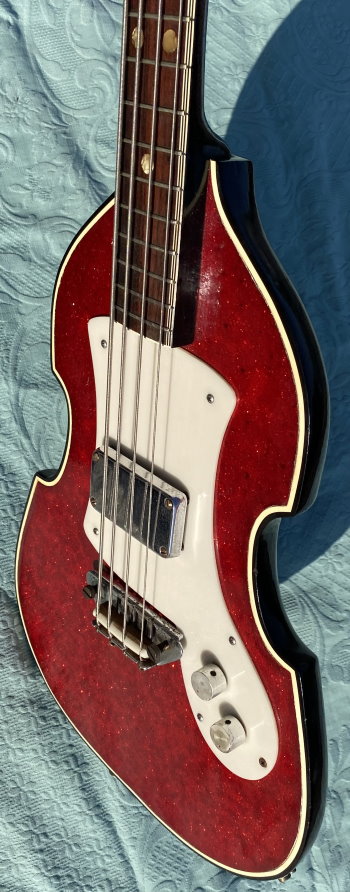
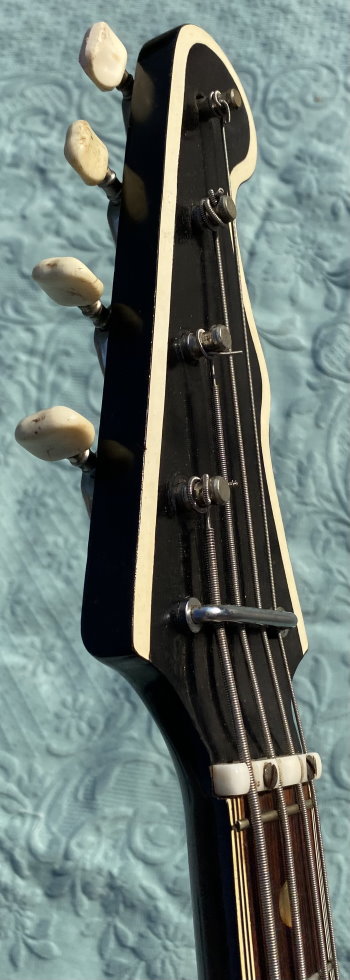
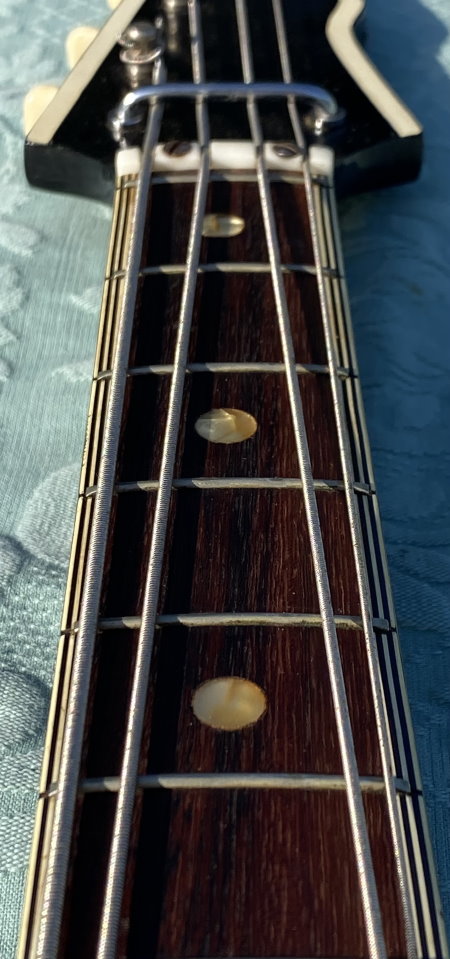
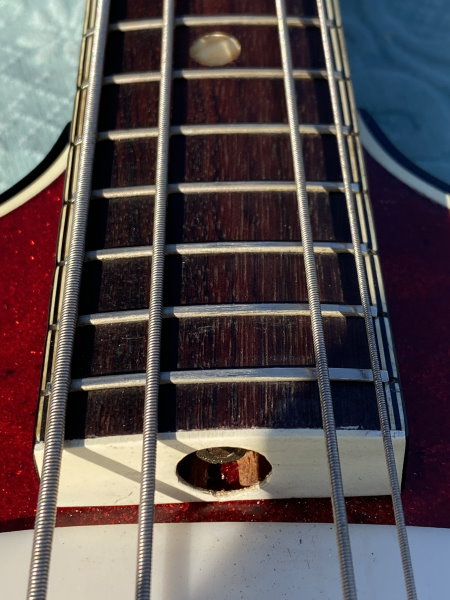
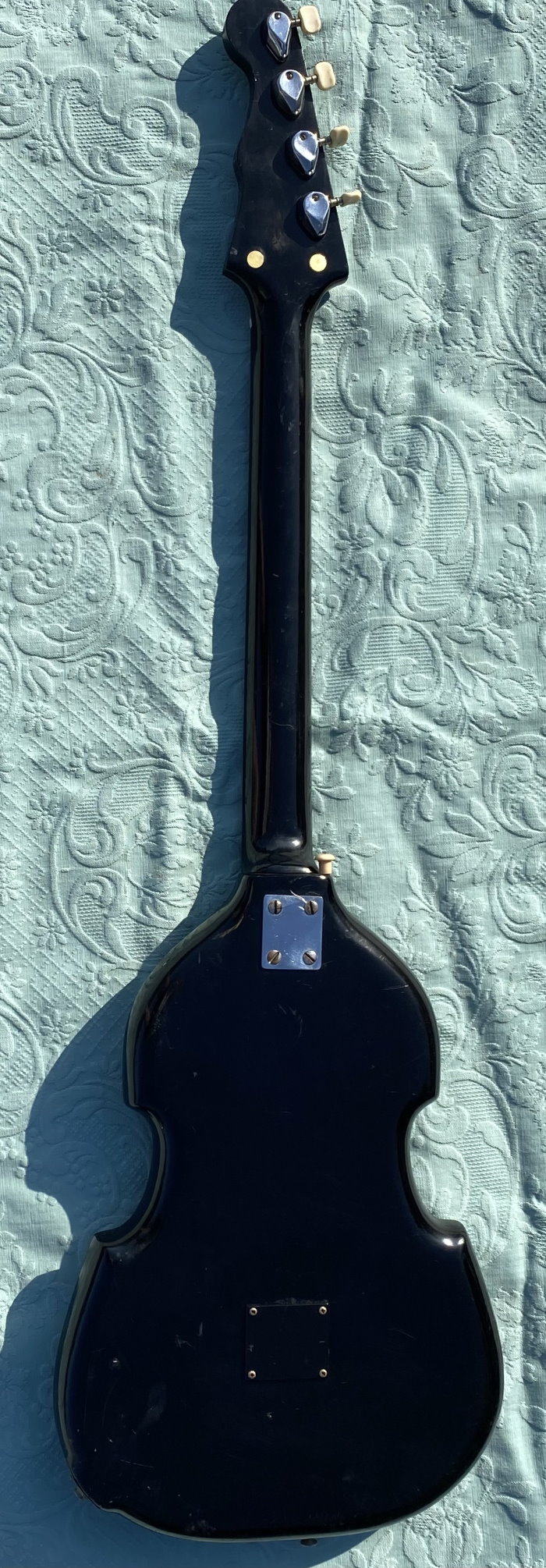
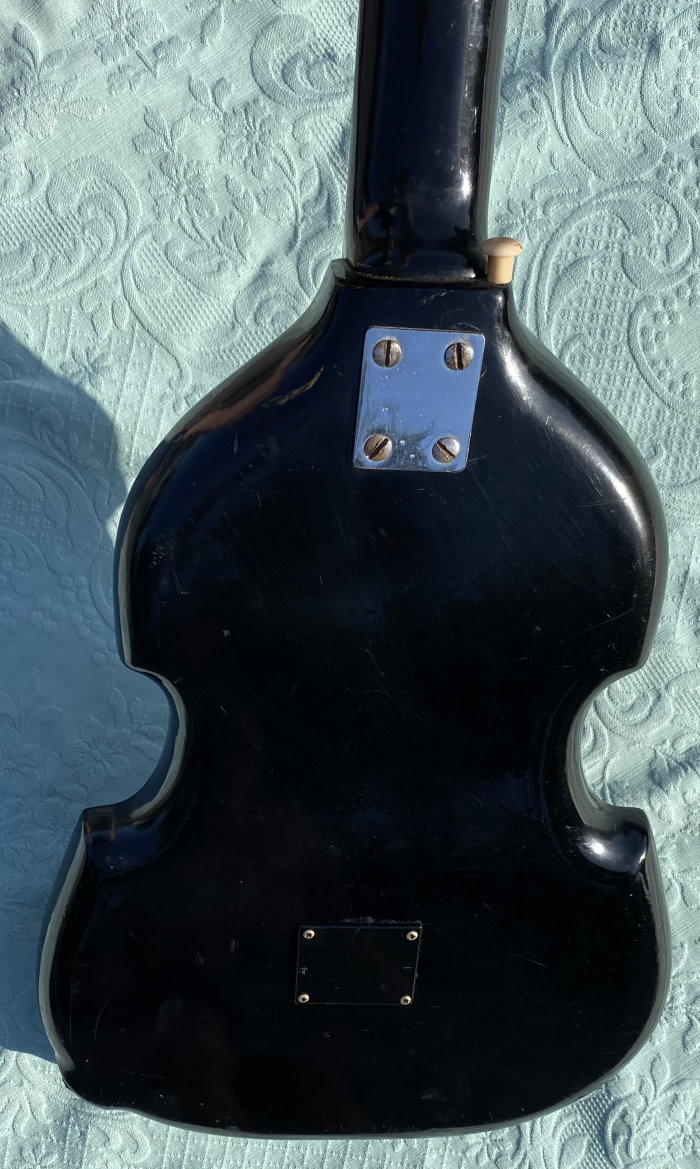
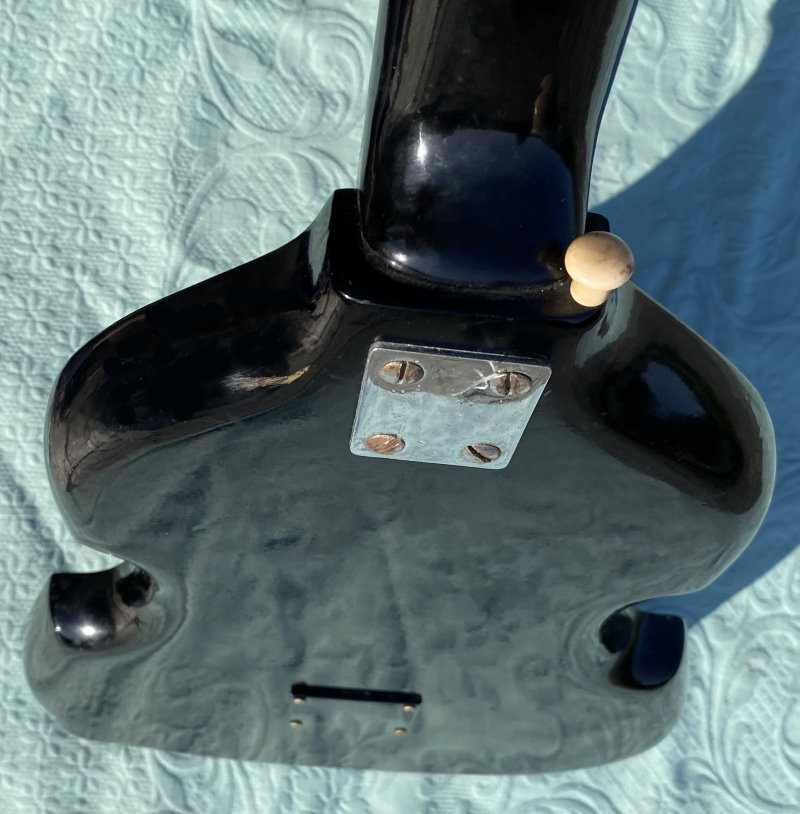
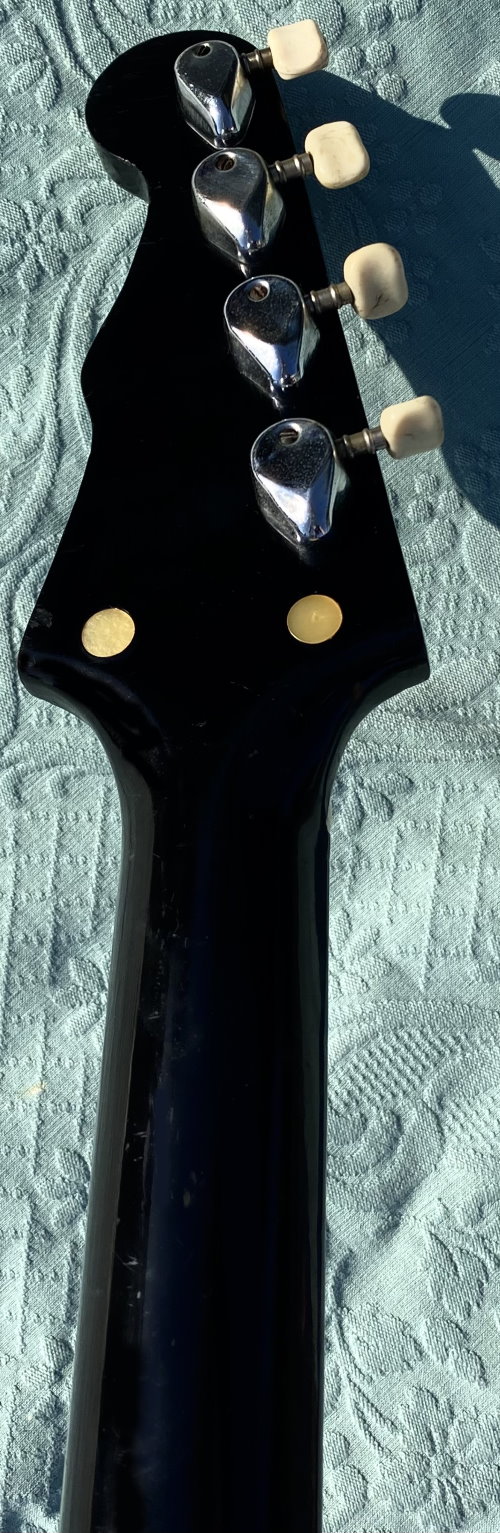
First 60's MEAZZI CONQUEST Violin Bass Red Sparkle Made in Italy 1Pickups RARE code BA 114
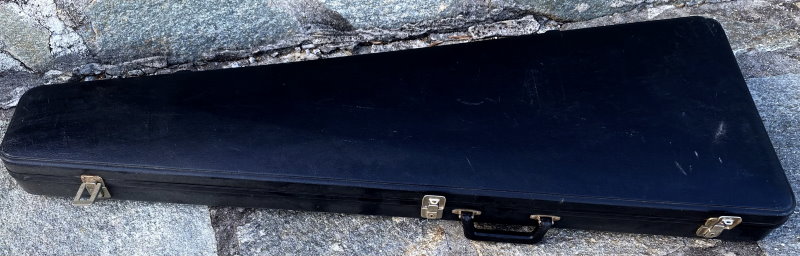
Very nice conditions, some little ding&dong, straight neck, very good frets, all circuit working well, low action, all original comes in molded priod case.
Video Sound: https://youtu.be/zlrGhIKKrmU
https://www.fetishguitars.com/meazzi/meazzi-sparkling-years/#top
Meazzi is one of Italy's historic musical instrument brands. Unlike the Marche tribe of Eko & Co., Lombard entrepreneurs became a giant that also distributed watches, amplifiers, professional equipment, and music publishing. Meazzi was also, and above all, synonymous with drums in Italy and around the world.
The Meazzi story begins in Mairago near Lodi, where Antonio and Carolina raised their children Enrico (1926), Remo (1929), Antonietta (1923), and little Marino (1934). Their father, Antonio, worked at Caproni and, after work, enjoyed making and selling steel springs. In 1943, their eldest son, Enrico, retired and worked for a while in the goldsmiths' and watchmakers' supplies sector. This was the opportunity to include his father's springs, used for alarm clocks and gramophones, in his sample collection. Customers requested more parts, and Enrico obtained supplies from Gian Bruto Castelfranchi, founder of the renowned GBC, in Milan. On July 24, 1946, Enrico Meazzi registered his sole proprietorship, specializing in spare parts for watches and gramophones, with the Chamber of Commerce. The company's headquarters are still the family home on Via Montepiana. In 1947, Enrico boldly entered into business with Castelfranchi's suppliers, Cattaneo-Pogliani-Morelli, and with them opened their first office in Milan at Via Bligny 27, after a brief stay in Bologna and some disagreements with his mother. In 1953, a new corporate structure was established with the arrival of brothers Remo and Marino, but above all their future brother-in-law Luigi Scarpini, who brought momentum and dynamism to the company. New headquarters were opened on Via Beatrice D'este. The first guitars in the 1950s were made in Sicily, Germany, and Stradella (PV) and sold under the FRAMEZ (FRAtelli MEaZzi) brand, which was intended to evoke the much more famous Framus. Franco Caldironi and Attilio Olivieri Franco Caldironi and Attilio Olivieri It was a boom without competition: new headquarters with 60 people at Via Piatti, number 4. The warehouse received 200 drum kits a week, all previously reserved and sold. In 1957, two encounters took place: with Wandré and with Franco Caldironi, a young bassist who was building drum kits that were then extremely expensive and imported only from the USA. Between 1958 and 1959, production began on the Jolly series, made in Brianza with pressed cardboard. For the cymbals, Zanchi (Ufip) was contacted. For the drumheads, Remo Belli (Remo), a Piacenza emigrant who had lived in Los Angeles, was contacted. The success was explosive. Wandré, for his part, supplied some of the Framez guitars until 1960/61, and then began collaborating with Davoli. For obvious reasons, we have grouped Wandré's instruments under the section bearing his name. The acoustic guitars, no longer Sicilian, were produced by Panati of Stradella, which expanded its supply to electric guitars starting in 1962. In addition to the Framez brand, Meazzi registered the Hollywood brand for professionals. From 1963 to 1969, guitars were produced by the Polverini brothers in Castelfidardo, alongside an original Sicilian production company called DYNELECTRON, imitating the range of instruments produced by the American Danelectro. Neither of the Meazzi brothers could play or had any musical knowledge. Theirs was an entirely entrepreneurial adventure reminiscent in many ways of Oliviero Pigini's. International strategies, outsourced production, use of endorsements for marketing, and investment diversification. Meazzi founded EDM Edizioni Discografiche Meazzi and several labels (Hollywood, Panoramic Record, Astraphon), and never abandoned the watch department, which apparently also supplied Celentano in the Rome headquarters adjacent to the music publishing house. Meazzi also produced electronics, voice systems, the first with tape echo, distributed keyboards from the Marche region, and had a full range of orchestral instruments in its catalog. In 1969, production of electric guitars and basses ended, but the 1968 catalog already included the distribution of Eko, Brandoni, Moreschi, and Beccacece guitars. In the following years, Meazzi increasingly focused on amplification, accessories, and the distribution of foreign brands throughout Italy. These were the years of Via Bellerio, and later Paderno Dugnano.