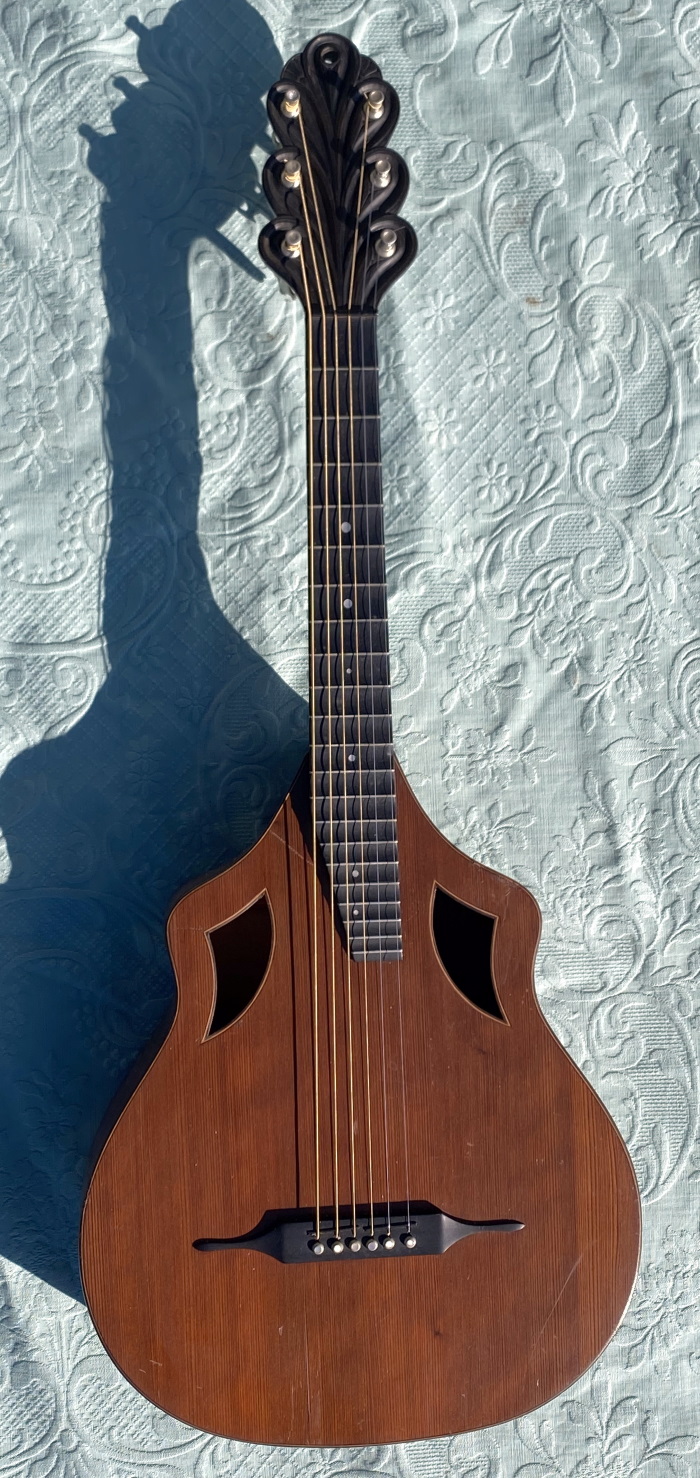
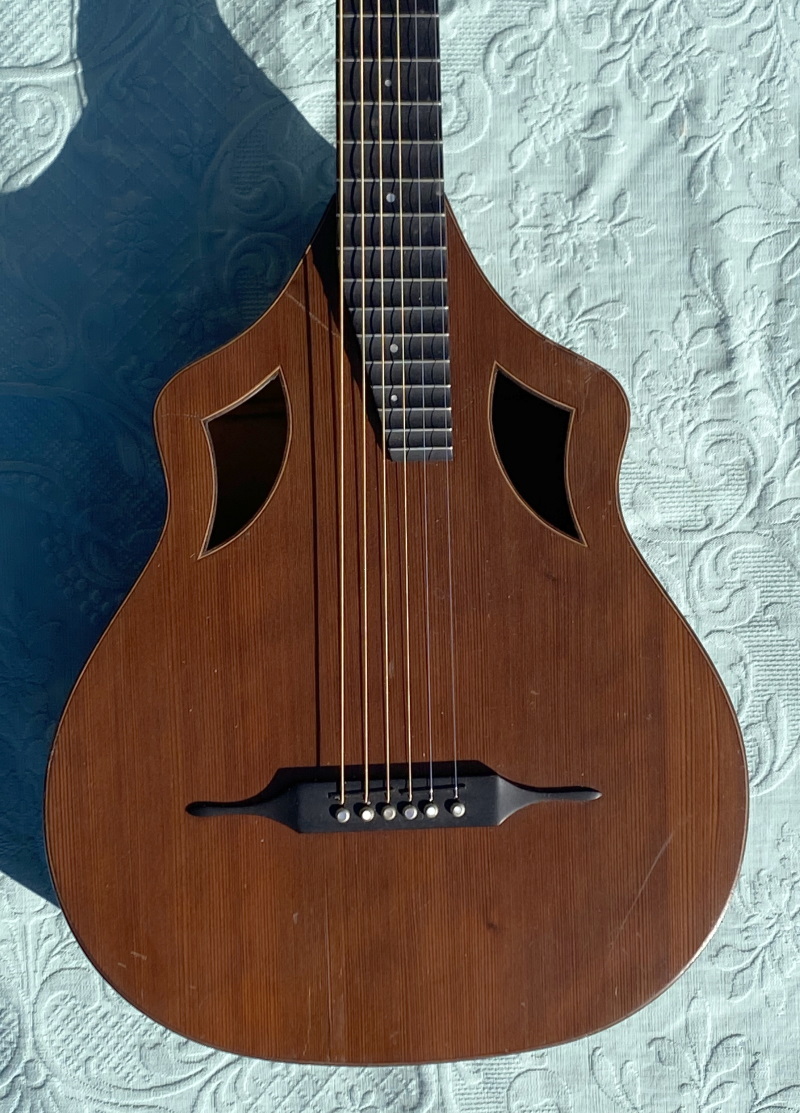
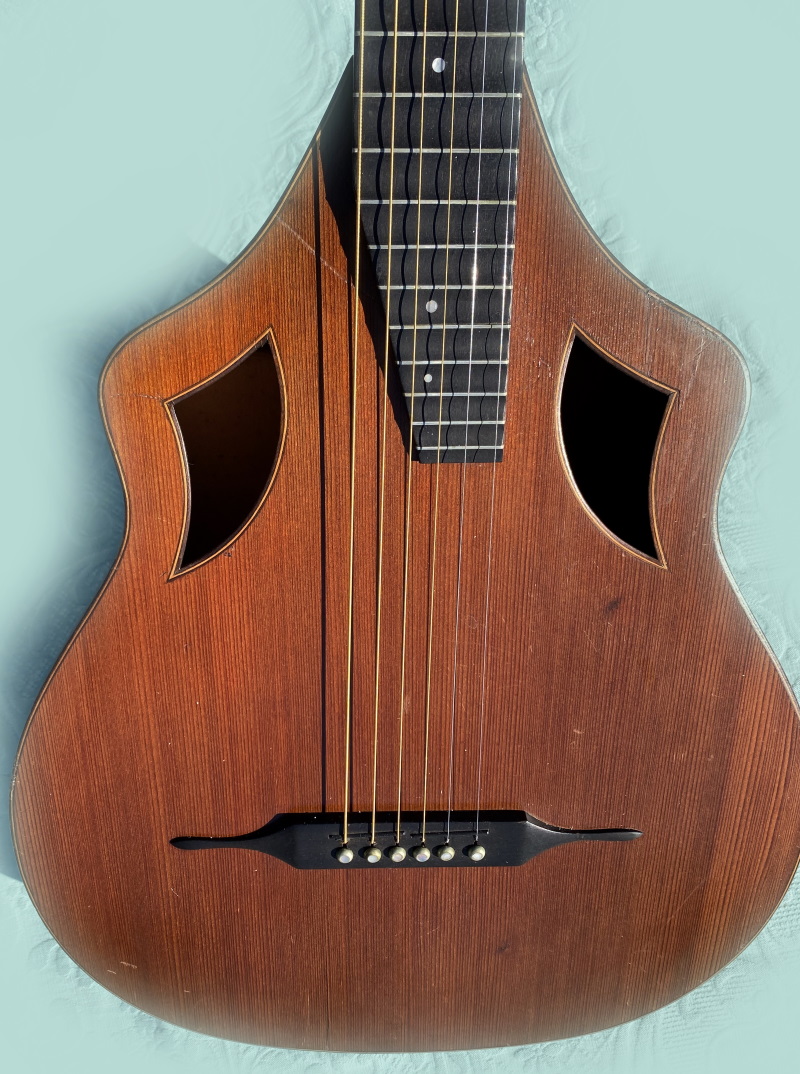
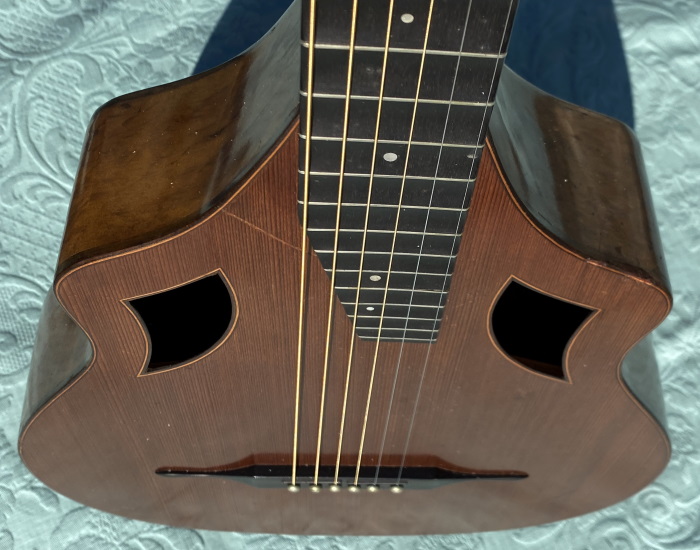
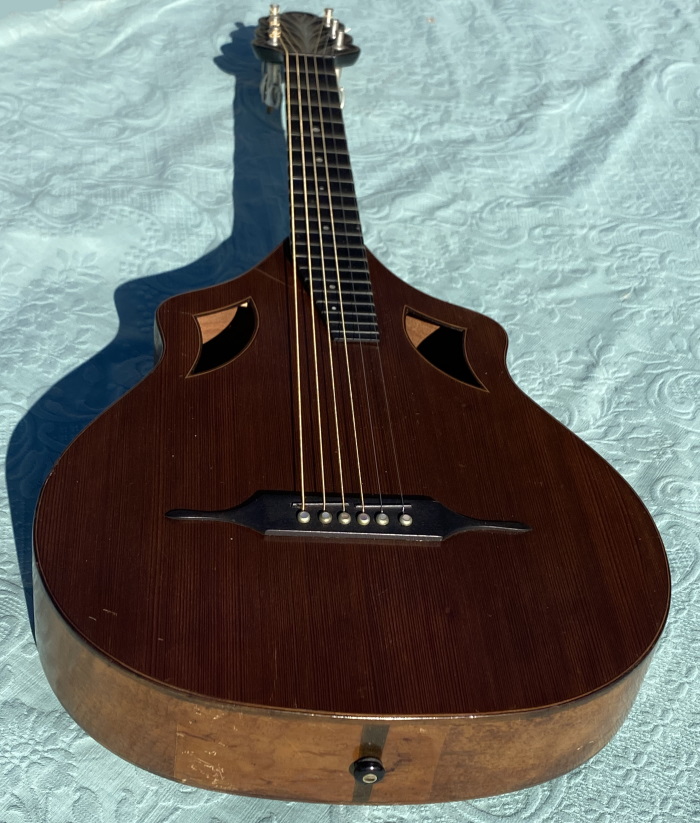
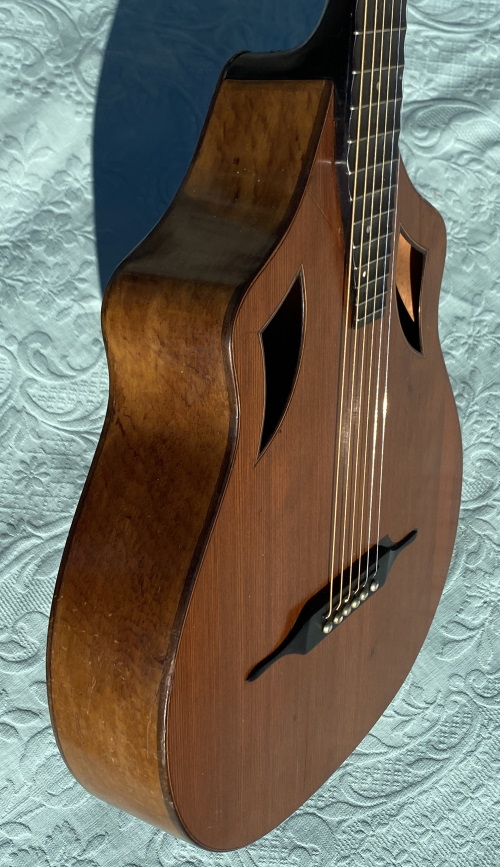
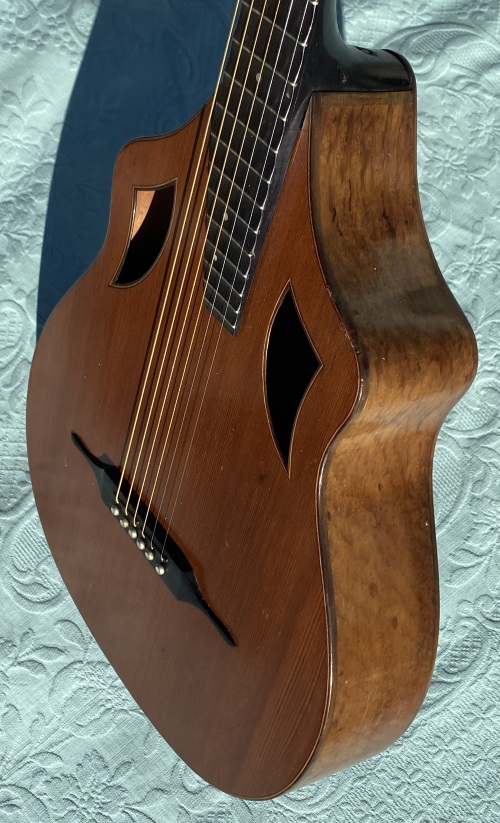
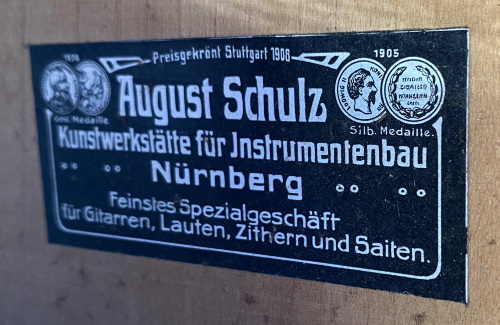
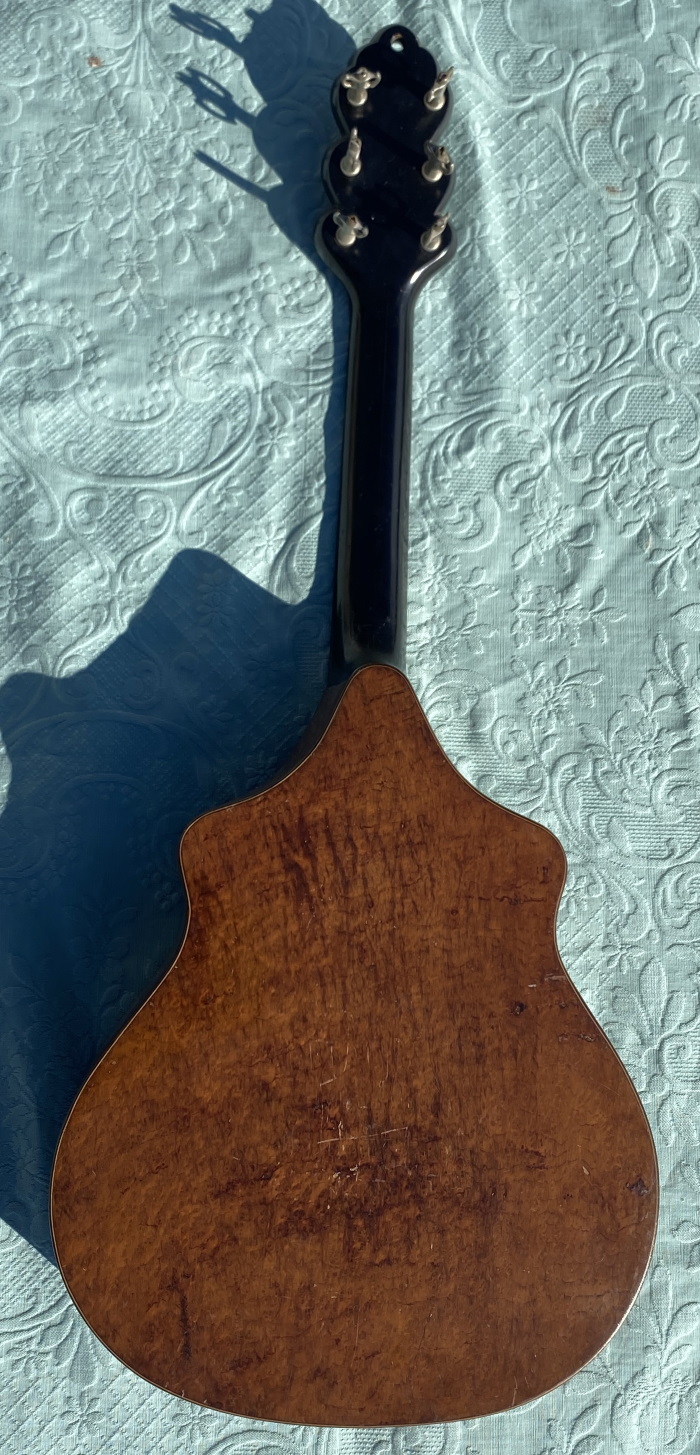
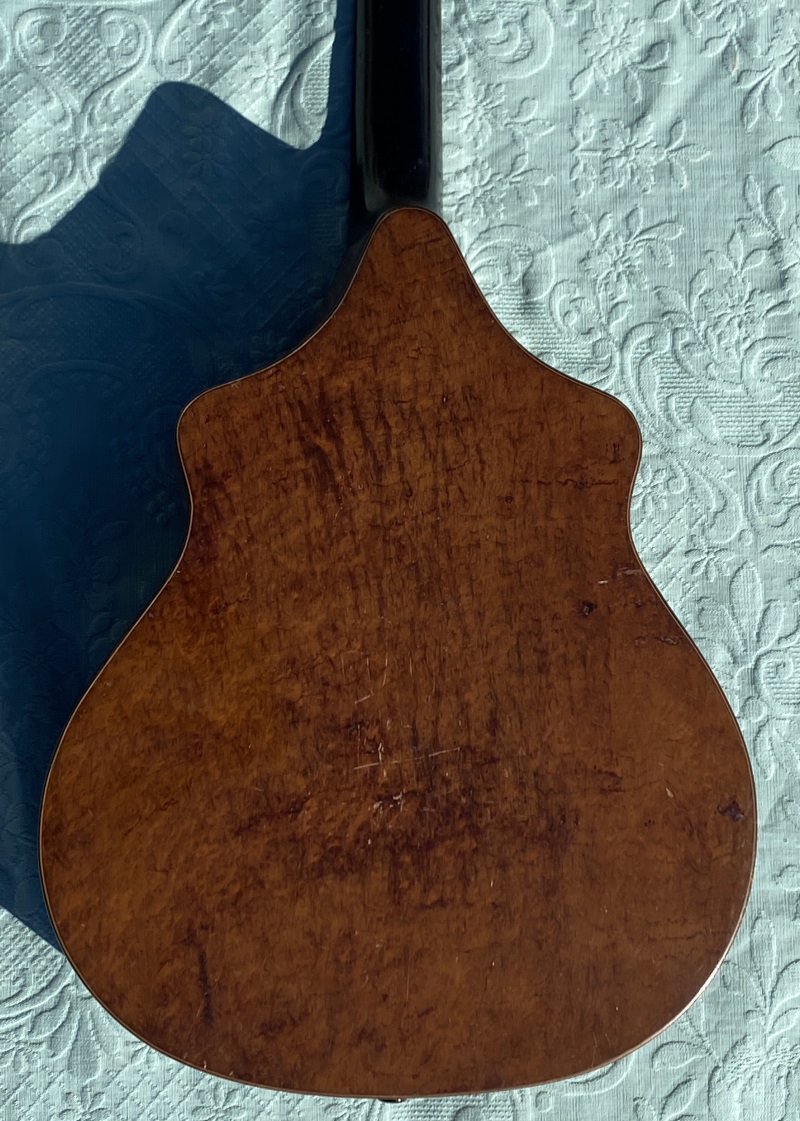
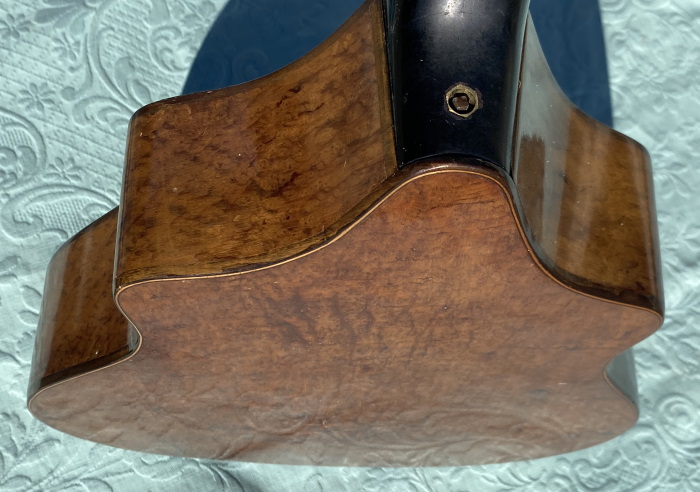
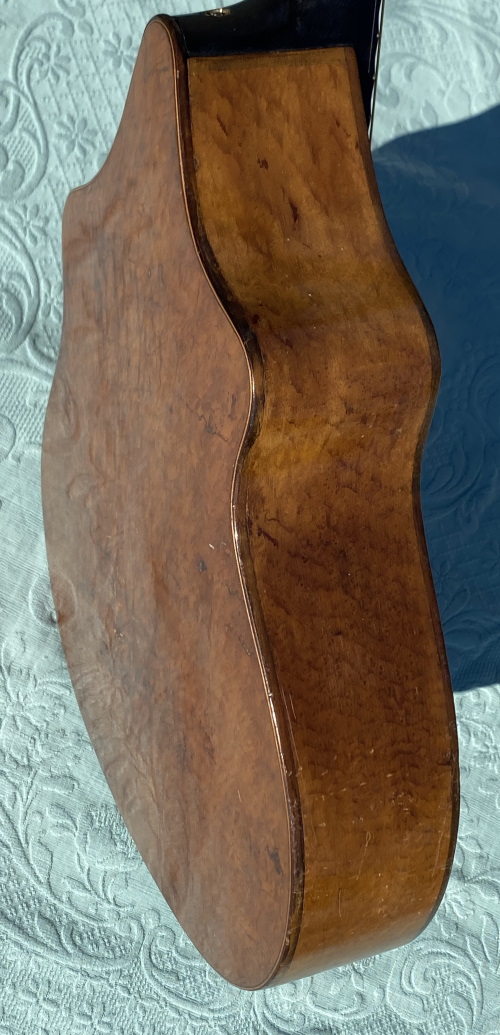
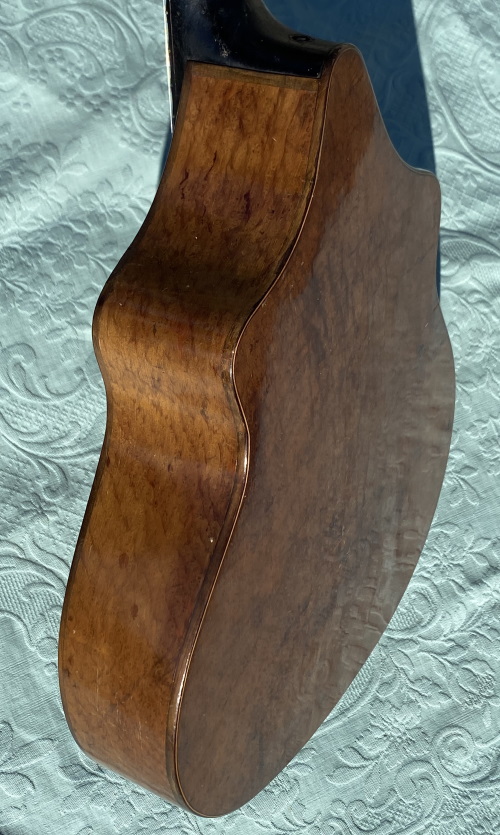
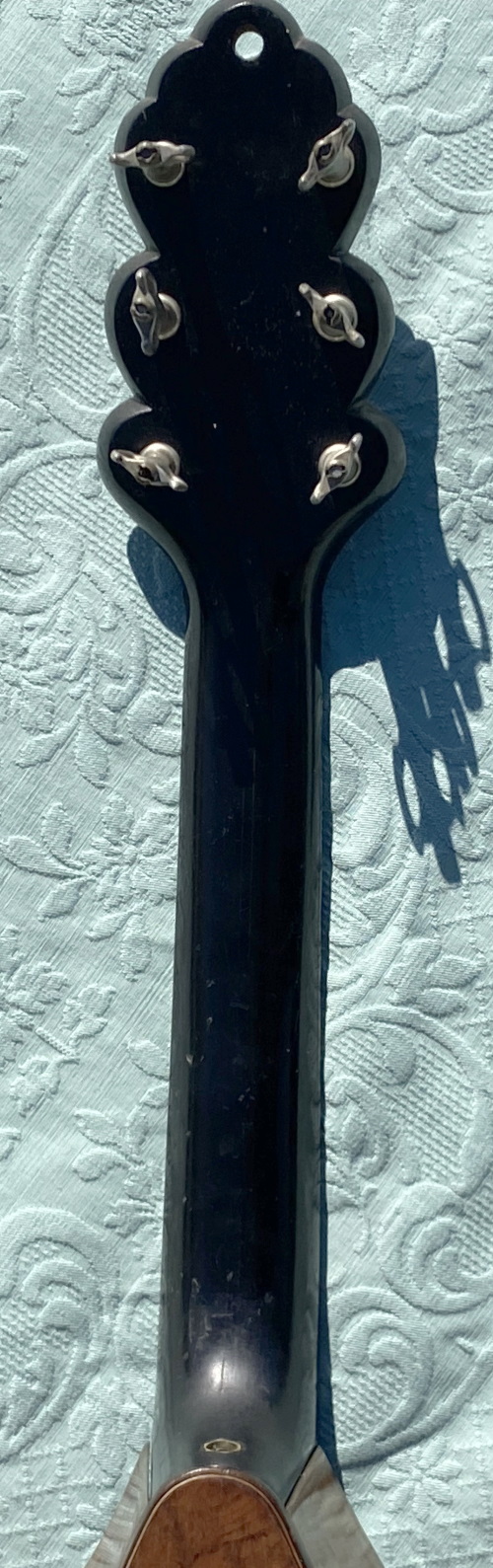
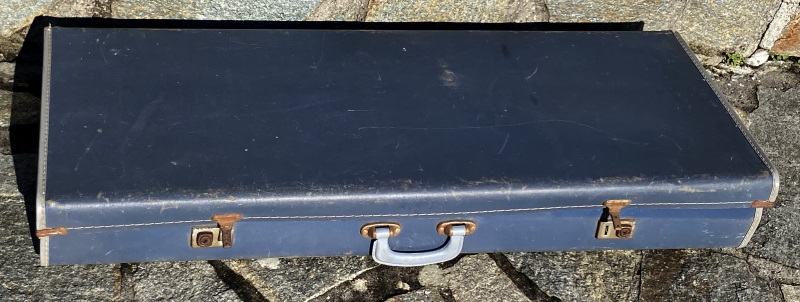
First 1900 Romantic/Parlor Guitar August Shulz of Nürnberg Bronze Strings Made in Germany. Comes in old case as you see in photo. code AC164
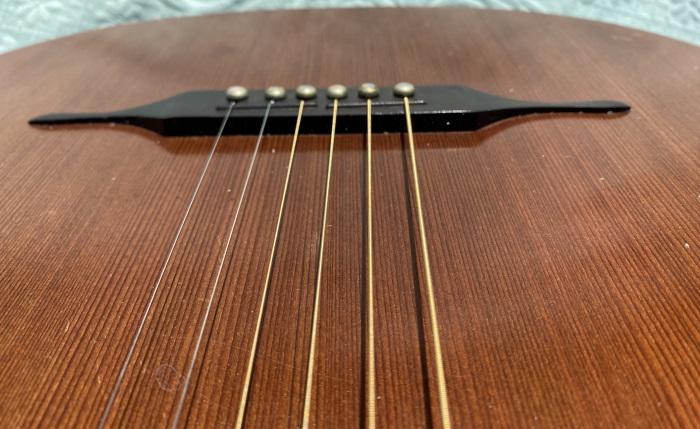
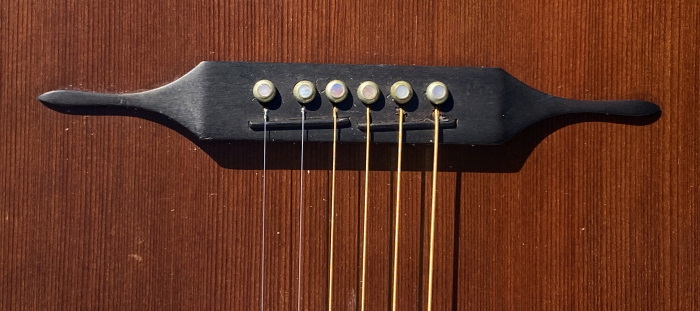
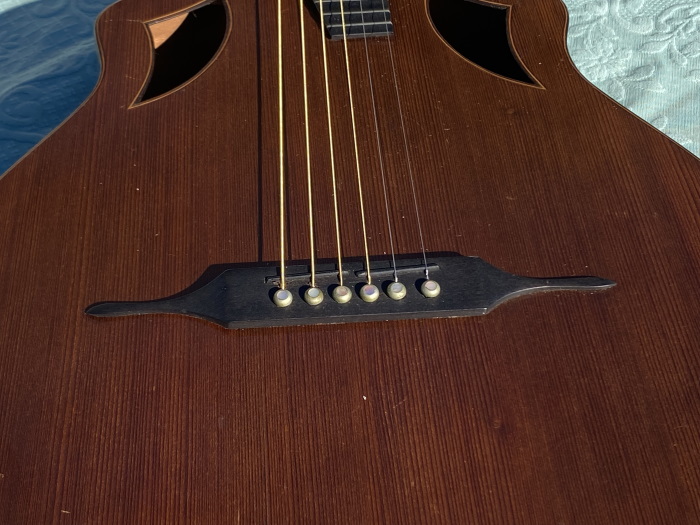
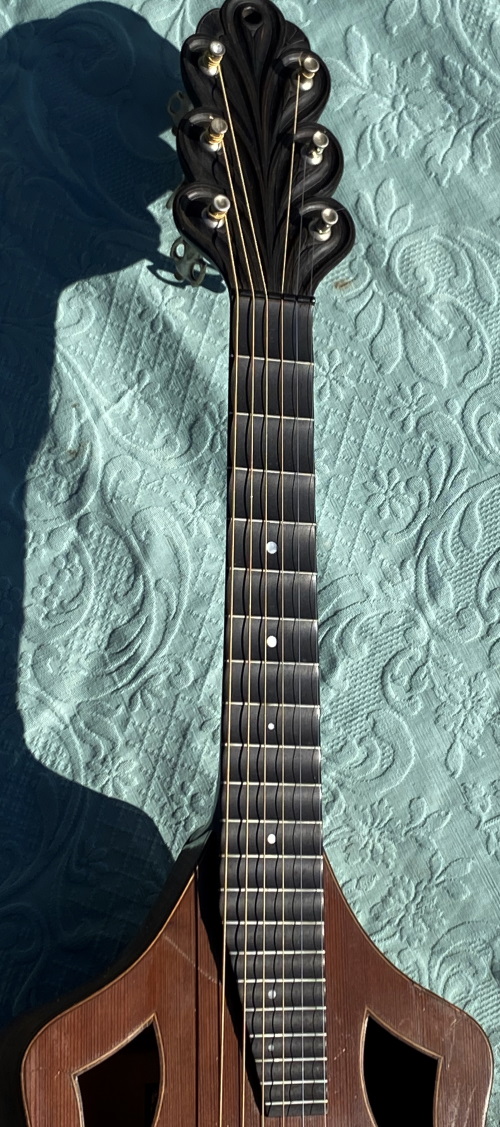
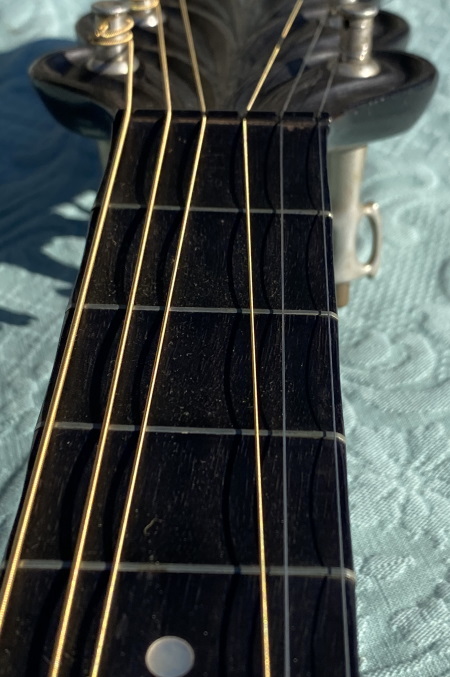
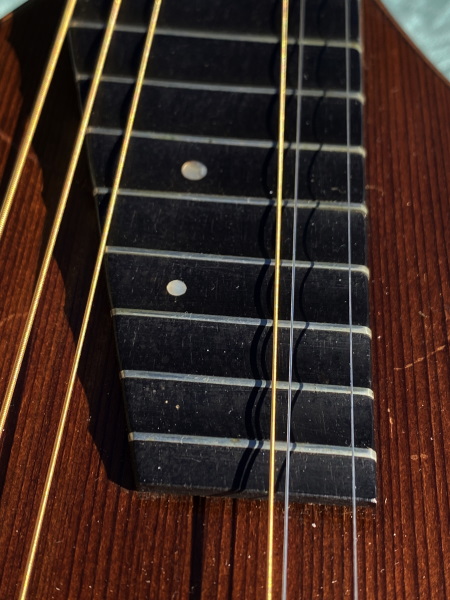
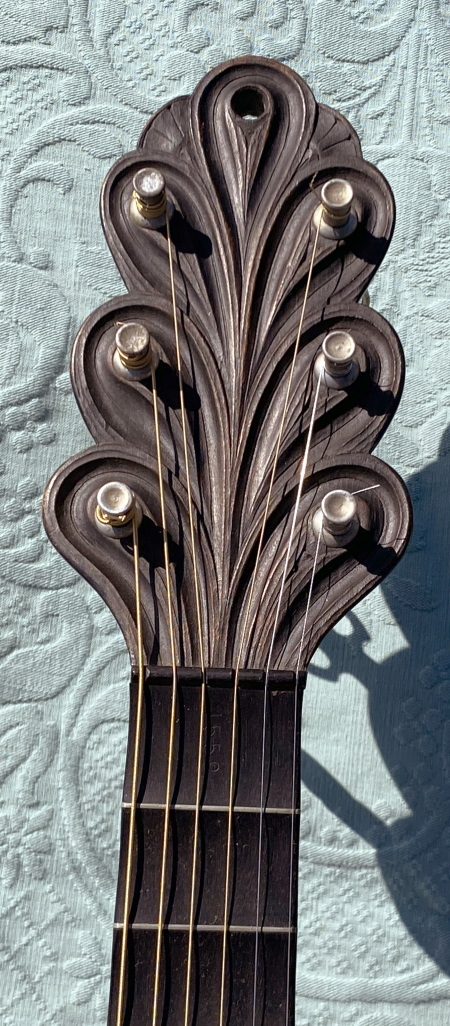
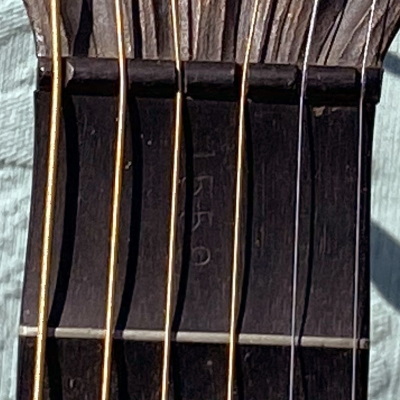
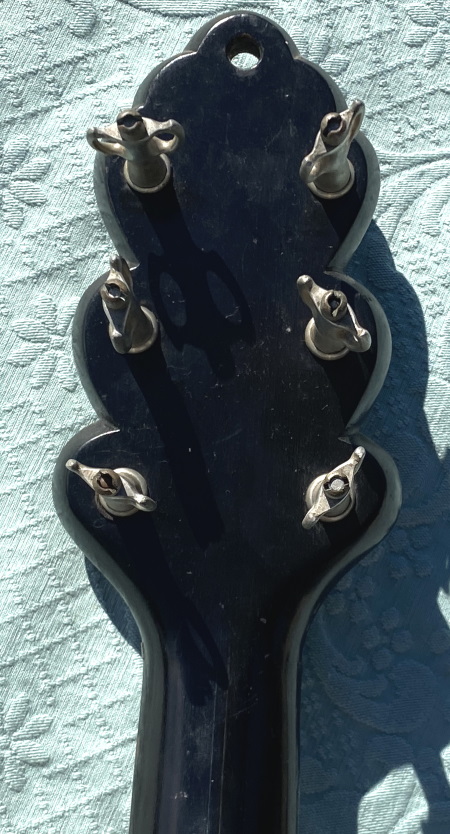
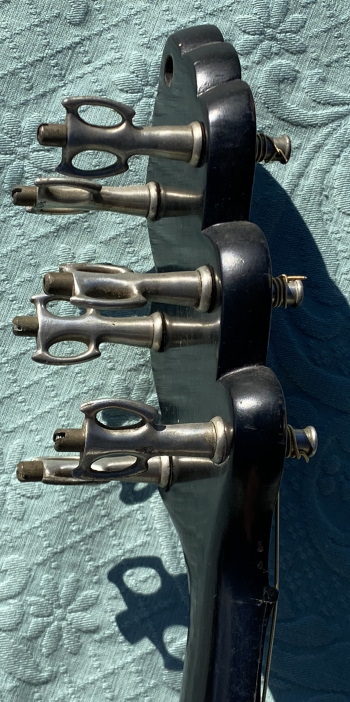
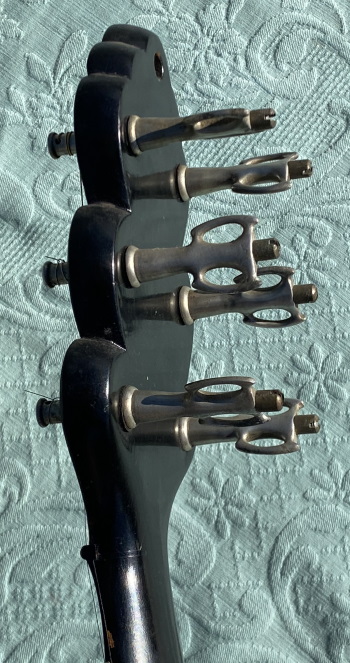
A rarity: a historic, signed guitar by August Schulz. "Wappengitarre" (coat-of-arms style) model! A similar example is held in the Museum of Musical Instruments at the University of Leipzig. Crafted from exquisite woods. Good action and intonation. Ebony fingerboard and bridge; quick-release tuning machines. The action is adjustable with the simple twist of a clock key. Locking tuning pegs keep the instrument well in tune, with very little fuss. I might add that though they are metal and may appear heavy in pictures it is a very light material and the headstock does not feel to have extra weight, and is not heavy at all. The headstock has been beautifully carved.The guitar is constructed in the form of what is called the "Wappenguitar" which was very popular in the 19th century particularly in Austria and Germany. It is a wonderful form that allows one to soar to the highest register with great ease.
Along with Hermann Hauser and Hans Raab, August Schulz was one of the finest luthiers of his era. This instrument is of great interest to both collectors and guitarists.
August Schulz was a renowned German luthier active between the late 19th and early 20th centuries, considered one of the finest makers of stringed instruments of his era, alongside figures such as Hermann Hauser and Hans Raab. Today, his guitars are sought-after antiques and collector's items, distinguished by an exceptionally high level of craftsmanship. He is best known for building classical guitars and *Wappengitarren* (guitars with a coat-of-arms or shield-like shape, which were very popular in the German and Austrian regions at the time). In addition to standard 6-string models, he often crafted instruments featuring extra bass strings (4 to 5 additional strings) positioned off the fretboard to extend the lower register. He used high-quality, seasoned woods, ebony fingerboards and bridges, and precision tuning mechanisms. Historical value: some of its finest specimens are preserved in museum collections, such as the Museum of Musical Instruments at the University of Leipzig.
Measures: Total 87,5cm - Maximum body width 35cm - Fingerboard length 39cm - Body thickness 7,5-8,3cm - Guitar scale length 55cm